
Last reviewed: September 2026
There is no single universal Japanese vehicle document that should be treated as a direct one-for-one equivalent of the EU Certificate of Conformity (COC). Japan uses a combination of vehicle registration, inspection, type-designation/type-approval and export documents. The informal label “Japanese Certificate of Conformity” can therefore be misleading if it is used without identifying the actual document.
How Japan’s Vehicle Compliance System Works
Japan’s Road Vehicles Act framework separates several functions that are often compressed into the word “conformity”:
- registration identifies ownership and vehicle use;
- inspection checks compliance and roadworthiness;
- type designation/type approval concerns vehicle or component types;
- technical-standard certificates can be used in specific approval procedures;
- export deregistration documents prove that a vehicle is being removed from the Japanese registration system for export.
Japanese Registration and Inspection Documents
MLIT explains that vehicles subject to Japan’s national registration system must be registered before they can be driven on public roads. Registration records vehicle identity, ownership and use.
The Japanese registration/inspection certificate therefore serves a different purpose from an EU COC. It is evidence about the registered vehicle in Japan, not a declaration that the vehicle conforms to an EU whole-vehicle type approval.
What Document Is Used When a Vehicle Is Exported from Japan?
For vehicles being exported, Japan uses an Export Certificate / export deregistration procedure. MLIT’s regional transport bureaus describe procedures such as Export Cancellation Provisional Registration and an Export Scheduled Notification Certificate for vehicles that have already been temporarily deregistered.
These documents are important in the ownership/export trail when the car reaches another country. They should not be described as an EU COC.
Japan, Type Approval and International Recognition
Japan operates vehicle and equipment type-designation systems and is a contracting party to the UN 1958 Agreement on reciprocal recognition of vehicle and component approvals.
MLIT also participates in international whole-vehicle type-approval (IWVTA) work. This allows certain approvals granted under UN Regulations to be recognised across participating jurisdictions when the relevant regulation and approval scope apply.
However, mutual recognition of particular UN approvals should not be confused with automatic EU registration of every Japanese-market vehicle.
Japanese Documents vs the EU Certificate of Conformity
| Document/system | Main purpose |
|---|---|
| Japanese registration/inspection document | Records the vehicle in Japan’s registration and inspection system. |
| Japanese export deregistration/export certificate | Supports legal export and shows removal/export status. |
| Technical-standard/type-approval certificates | Used within defined Japanese/UN approval procedures. |
| EU Certificate of Conformity | Manufacturer declaration that a specific vehicle conforms to an approved EU vehicle type. |
The important question is therefore not “where do I order the JCC?” but “which Japanese documents does my vehicle have, and what does the destination registration authority require?”
Importing a Japanese Vehicle into Europe
A European registration file for a Japanese-market vehicle can require:
- Japanese export deregistration/registration documents;
- purchase and transport documents;
- VIN/chassis verification;
- technical data covering dimensions, mass, engine and emissions;
- evidence of any recognised UN/EU approvals;
- roadworthiness or individual-approval inspection in the destination country.
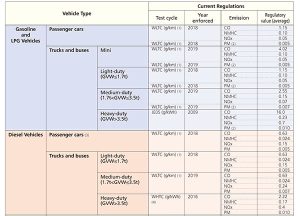
For emissions terminology, see our updated guide to Japanese JC08 and WLTC testing.
Japanese Vehicle Document FAQ
Is there an official universal “JCC” for every Japanese car?
Not in the same sense as the EU manufacturer COC. Japan uses several registration, inspection, approval and export documents depending on the purpose.
Is a Japanese export certificate a COC?
No. It proves export/deregistration status; it does not declare conformity with an EU whole-vehicle type approval.
Can a Japanese vehicle have recognised UN approvals?
Yes, Japan participates in UN vehicle-regulation frameworks, but the effect depends on the specific approval and the rules accepted by the destination country.
What should I obtain before buying a Japanese import?
Get the chassis/VIN, registration/export documents, purchase evidence and as much manufacturer technical data as possible before shipping.